skip to main |
skip to sidebar
 Our annual fundraising dinner, “A Taste of Asia”, has come and gone. Held this past Saturday at the Doubletree Paradise Valley Resort, the dinner was successful on multiple fronts. The Asian appetizer reception was quite lively and included the successful sale of almost all 60 or so silent auction packages. The dinner program went smoothly. As usual, our hosts, Ethel Luzario and Ted Namba, did a wonderful job keeping the program moving along. I think our honorees – Steve Sanghi, Mr. and Mrs. Dennis Yee, and Asian American WWII veterans – felt good about their portion of the program. Each had a nice digital video segment and a chance to say a few words. Our major sponsors – Wells Fargo, APS, Blue Cross/Blue Shield, and Gilead Sciences – seemed pleased. Lastly, the talent competition was engaging and had quite a diverse group of participants. In the end, our “face changing” participant triumphed ahead of a number of surprisingly talented participants. All in all, it was indeed an affair to remember.
-Doug Hirano, MPH, APCA Executive Director

My friend and colleague Mr. Fred Taylor invited me to be on his radio show, Men’s Health, yesterday. I was happy to speak about health issues in the local Asian American and Pacific Islander communities and did my best to share what I knew about our mission and related activities towards improving the health of Asian Americans and Pacific Islanders. However, I guess you never know what to expect on live radio. Fred’s co-host, Dr. Bob Gear (pictured on right), had some interesting questions for me about sanitation practices in local Chinese restaurants and also related to illegal immigration among Asians in Arizona. I think my responses to these questions were politic. In any case, I’m hoping I won’t be getting any phone calls from Sheriff Joe Arpiao or the Chinese Restaurant Association any time soon.
-Doug Hirano, MPH, APCA Executive Director
 This past Friday, a group of about 20 community and academic leaders met to discuss how to best address the many disparities related to cancer here in Arizona. The meeting, held at the Talking Stick Resort, included a lively discussion about the need for enhanced collaboration, advocacy and education. Dr. Tim Flood (pictured with Justin Tai, APCA Public Ally) provided profiles of cancer disparities by racial/ethnic group as a lead-in to the facilitated discussion. The Cancer Health Disparities group is a subcommittee of the Arizona Cancer Control Coalition, led by the Arizona Department of Health Services.
Doug Hirano, MPH, APCA Executive Director
The Asian Pacific Community in Action recently held a birthday party for the Affordable Care Act, which was passed on March 23, 2010. That same day, we stopped by Congressman Ed Pastor’s office to drop off a small birthday cake and express our community’s support of the ACA.
Both of these activities were atypical for us, as we are often focused on directly providing health education and clinical services to our populations of interest. However, this recent advocacy work is a taste of things to come. In the coming months, we will be exercising our right and obligation to speak up for the rights and interests of our communities. If we don’t, who will?
“In Germany they first came for the communists, and I didn’t speak up because I wasn’t a Communist.
Then they came for the Jews, and I didn’t speak up because I wasn’t a Jew.
Then they came for the trade unionists, and I didn’t speak up because I wasn’t a trade unionist.
Then they came for the Catholics, and I didn’t speak up because I was a Protestant.
Then they came for me – and by that time, no one was left to speak up.”
--Pastor Martin Niemoller
- Doug Hirano, MPH, APCA Executive Director
It’s official. Asians and Native Hawaiians and other Pacific Islanders are the fastest growing racial groups in Arizona. New 2010 Census data indicates that those of only Asian race increased by 91.6% between 2000 and 2010. Hawaiians and other Pacific Islanders increased by 87.9% for the same period.
In comparison, the White population increased by 20.5%, the Black population by 63%, and the American Indian/Alaska Native population by 15.9%. Individuals of Hispanic or Latino origin increased by 46.3%.
As additional 2010 Census data becomes available, I will provide updates.
-Doug Hirano, MPH, APCA Executive Director
It's time again for "A Taste of Asia," the signature annual fundraising dinner event of the Asian Pacific Community in Action. This year, we will be holding it on Saturday, April 23, 5:30 pm at the elegant Doubletree Paradise Valley Resort in Scottsdale. Tickets are $100. We will have our usual sumptuous reception, offering hors d'oeuvres from local Asian restaurants, a silent auction and a talent competition. In addition, we will be honoring several community leaders, including Mr. Steve Sanghi, CEO, Microchip Technology, Mr. and Mrs. Dennis Yee, community volunteers, and local Asian American WWII veterans. It promises to be an exciting and entertaining evening. Please join us!
You can get more information about the event at the APCA website, www.apcaaz.org, or you can directly register at http://www.eventbrite.com/event/1414387471.
For further information, please feel free to contact Ms. Kamana Khadka at (602) 265-4598 or kamana@apcaaz.org.
-Doug Hirano, MPH, APCA Executive Director
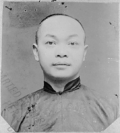 As discussions intensify regarding American citizenship as a birthright, I am reminded never to take U.S. citizenship for granted – particularly as an American of Japanese descent. For a very long time, individuals of Asian descent faced almost insurmountable barriers to becoming American citizens – either through naturalization or birth.
The Naturalization Act of 1790 afforded U.S. citizenship only to immigrants who were “free white persons.” In 1870, naturalization laws were changed to include persons of African nativity and descent. However, individuals from Asia were not allowed to become naturalized American citizens until the 1943 passage of the Magnuson Act.
And while the Fourteenth Amendment to the Constitution passed in 1868 ostensibly conferred citizenship to all individuals born in the United States, for Asian residents, this birthright to citizenship had to be determined by the Supreme Court.
In 1894, Wong Kim Ark, an individual born in the United States of non-citizen Chinese parents, was denied re-entry into this country after a trip to China. He was detained at the Port of San Francisco on the basis that he was not a bona fide American citizen. He successfully sued for re-entry at the federal district court level; however, the United States government took the case to the Supreme Court, which eventually determined that Mr. Ark was a citizen by virtue of his birth in the United States – even though his parents were not and could not become citizens (due to the Chinese Exclusion Act of 1882).
Sadly, the specter of birthright citizenship restrictions has recently reappeared. This is a shame. For all the pain and suffering brought about by racist immigration policy to those of us with Asian roots, it appears that our Hispanic brothers and sisters are now being similarly targeted. Has history taught us nothing? Are we doomed to repeat our failings? This country was founded on the principle that we are all equal under the law. We still struggle to get this right at times, but we’ve made significant strides in civil rights over time. A return to restricted birthright citizenship will set us back, all of us — Hispanics, Asians, all of us with immigrant roots — more than 100 years.
Many, many people – including myself – owe Wong Kim Ark a debt of gratitude for his efforts over a century ago to fight for his American citizenship. Let’s hope his efforts were not in vain.
- Doug Hirano, MPH, APCA Executive Director



 Posts
Posts

